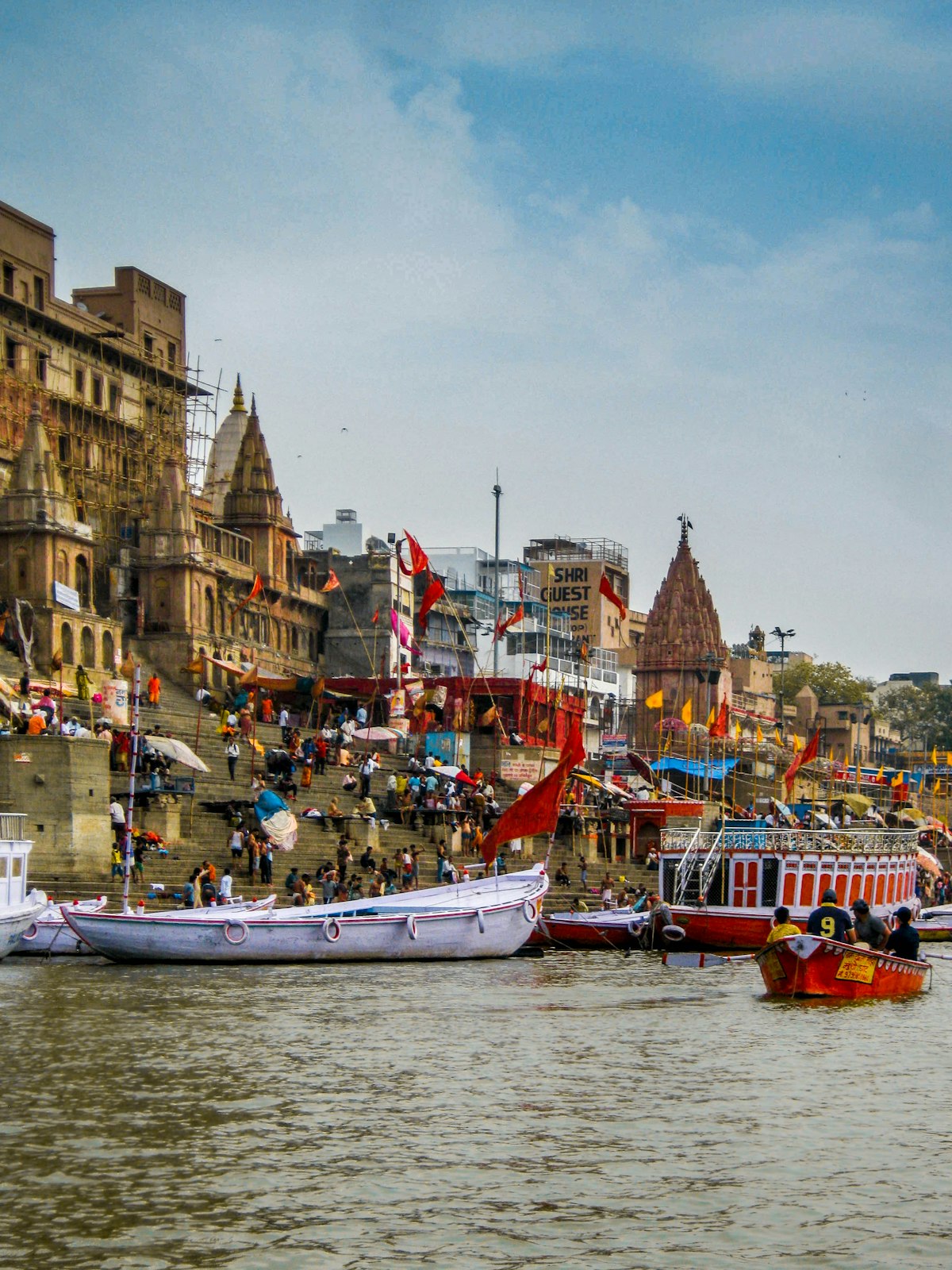
A city built around the river
Varanasi is one of the oldest continuously inhabited cities in the world and one of Hinduism's holiest sites, and nearly everything that matters here happens along the ghats: the stepped riverfronts lining the Ganges. Visiting well means understanding that you're a guest at an active site of daily worship and ritual, not just a scenic backdrop. This guide covers how to see the city while keeping that distinction front of mind.
Getting around
- The old city's lanes near the ghats are narrow and largely closed to vehicles: walking is the only way through much of it
- Cycle-rickshaws and autorickshaws cover longer distances outside the immediate ghat area
- Boats can be hired directly at the ghats for sunrise or sunset rides along the river
- The lanes are a maze and easy to get lost in: a local guide for your first walk through is genuinely useful here
- Varanasi's airport and train station are some distance from the ghats: factor in transfer time when planning arrival
Top sights & experiences
- A sunrise boat ride along the ghats, widely considered the best way to see the city's daily rhythm
- Dashashwamedh Ghat's evening Ganga Aarti, a large nightly fire ritual open to the public
- Kashi Vishwanath Temple, one of the most important Shiva temples in India
- A walk through the old city lanes (galis) connecting the ghats to the markets
- Sarnath, a short trip from the city center, where Buddha is said to have given his first sermon
Ghat & river etiquette
Manikarnika and Harishchandra ghats are active cremation sites, not tourist attractions, and require particular care.
- Photography at or near the cremation ghats is widely considered inappropriate and is restricted at some: ask before pointing a camera anywhere near a cremation in progress
- Keep a respectful distance from cremation processions and rituals; these are family events, not performances
- Dress modestly throughout the ghat area, not just inside temples
- Touts sometimes offer to guide you to a 'good viewing spot' near a cremation ghat for a fee: this is not necessary and best declined
- Boatmen and guides may ask for payment beyond an agreed fare; settle the price before boarding
Rules and sensitivities around the cremation ghats are taken seriously by the local community: when in doubt, watch what other respectful visitors do or simply keep distance.