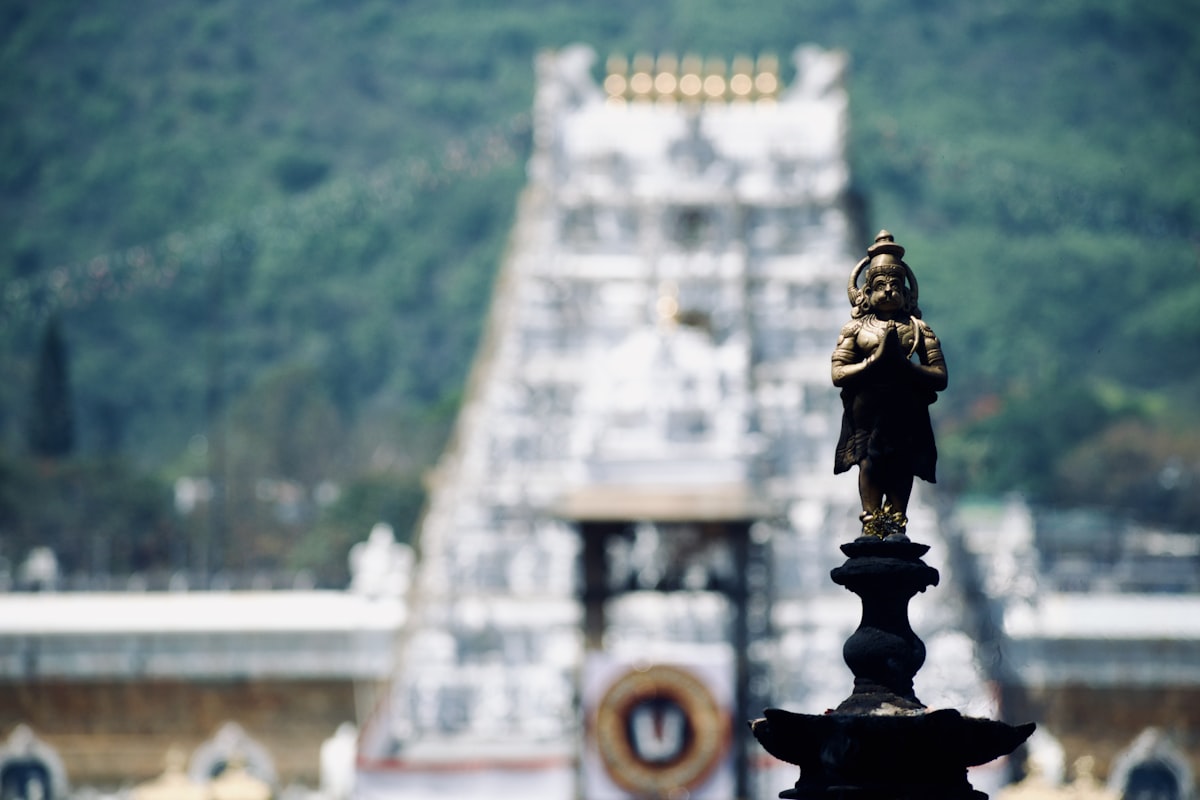
One country, many sacred traditions
India is home to active sites of worship across Hinduism, Islam, Sikhism, Christianity, Buddhism, Jainism, and more, and each tradition carries its own specific customs. Visitors are generally welcomed warmly at most sacred sites, provided they follow a few baseline expectations. This guide breaks down what differs by faith, on top of the universal habits: modest dress, removing shoes, lowering your voice: that apply almost everywhere.
Hindu temples and Jain temples
- Remove shoes before entering and dress modestly; some temples ask women to cover their heads
- Some Jain temples restrict leather items (belts, bags, wallets) from being brought inside at all: check before entering
- Photography inside the inner sanctum is often restricted even where it's allowed elsewhere on the grounds
- Non-Hindus are restricted from the innermost sanctum at some temples, particularly in South India: signage or staff will usually indicate this
- Bag checks and security screening are common at larger or more prominent temples
Mosques
- Remove shoes before entering and dress modestly; women are typically asked to cover their hair
- Visiting hours for non-worshippers may be restricted around prayer times, especially on Fridays
- Some mosque sections (especially main prayer halls during services) may be restricted to worshippers
- Speak quietly and avoid walking through areas where people are actively praying
- Photography is generally fine in courtyards but check before photographing people mid-prayer
Gurdwaras (Sikh temples)
- Cover your head before entering: coverings are usually provided free at the entrance
- Remove shoes and wash your feet at the entrance pools if provided
- Alcohol, tobacco, and non-vegetarian food are not permitted on the grounds
- If a free communal meal (langar) is offered, anyone is welcome to join regardless of faith
- Helping clear dishes after a langar meal is a welcomed, low-key way to take part in the community spirit of the place
Churches and other sites
- Dress modestly and remove hats (for men) as you would at a church anywhere
- Keep voices low during active services, and check whether photography is allowed before a service versus during one
- At Buddhist sites, walk clockwise around stupas and shrines where a circumambulation path exists
- When visiting any sacred site and unsure of the rules, observe what local worshippers do before acting, or ask an attendant
- At any sacred site, plan your visit around active worship times if you'd specifically like a quieter, less crowded experience
Specific access rules: especially around non-worshippers and the innermost sanctum: vary by individual site and can change. Confirm at the entrance if a particular site matters to your itinerary.