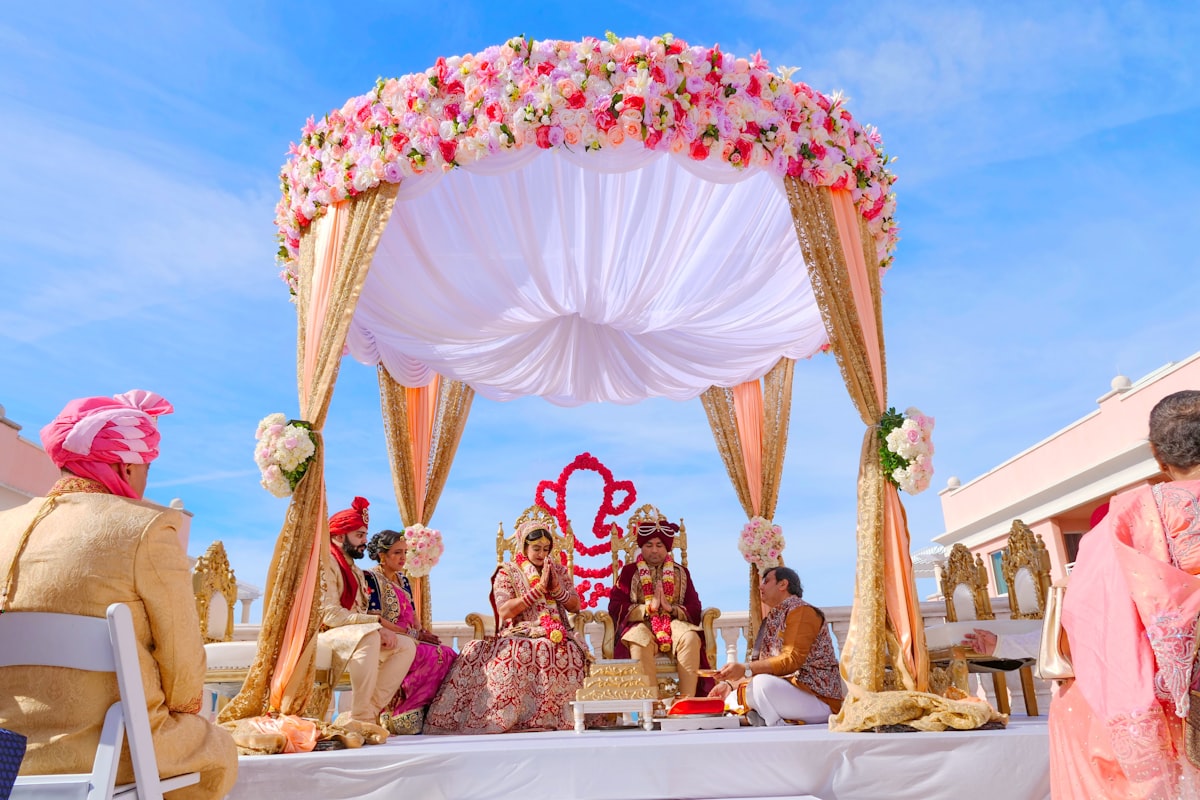
Multi-day, multi-event affairs
Indian weddings are typically not a single ceremony but a string of events spread across several days: pre-wedding rituals, a main ceremony, and a reception, each with its own dress code and customs that vary by region and religion. Invitations often specify which events you're invited to, and it's worth confirming if you're unsure. This guide covers the general expectations that apply across most Indian weddings.
What to wear
- Bright, festive colors are encouraged: avoid plain white or black, which can read as somber
- Traditional or formal Indian wear (saris, lehengas, kurtas, sherwanis) is welcomed from guests, not just hosts, but isn't required
- Pre-wedding events like mehndi or sangeet are often more colorful and casual than the main ceremony
- Comfortable shoes matter: many ceremonies involve sitting on the floor or removing shoes entirely
- Check the invitation for any specific dress code or color theme the hosts have requested for a particular event
Gifts and money
- Cash gifts are common and traditionally given in odd-numbered denominations (such as ₹101 or ₹501) rather than round numbers
- Gifts are usually given to the couple's family directly or placed in a designated box at the reception, not handed over during the ceremony itself
- If giving a physical gift, household items, jewelry, or gift vouchers are all common choices
- It's polite to bring a gift even to events you attend as a casual or extended-family guest
- Envelopes for cash gifts are sometimes handed personally to a parent of the couple rather than the couple themselves
At the ceremony
- Arrive aware that timing can be flexible: ceremonies often run later than the printed start time
- Follow the lead of other guests for when to sit, stand, or approach the couple
- Alcohol may or may not be served depending on the families' customs: don't assume either way
- It's normal and expected to eat at the event; food is central to most Indian weddings and often served as a large buffet
- Photography is usually welcome, but check before photographing specific religious rituals up close
Specific rituals differ significantly by religion and region (Hindu, Sikh, Muslim, Christian, and others): when in doubt, ask the hosts or a fellow guest what to expect.