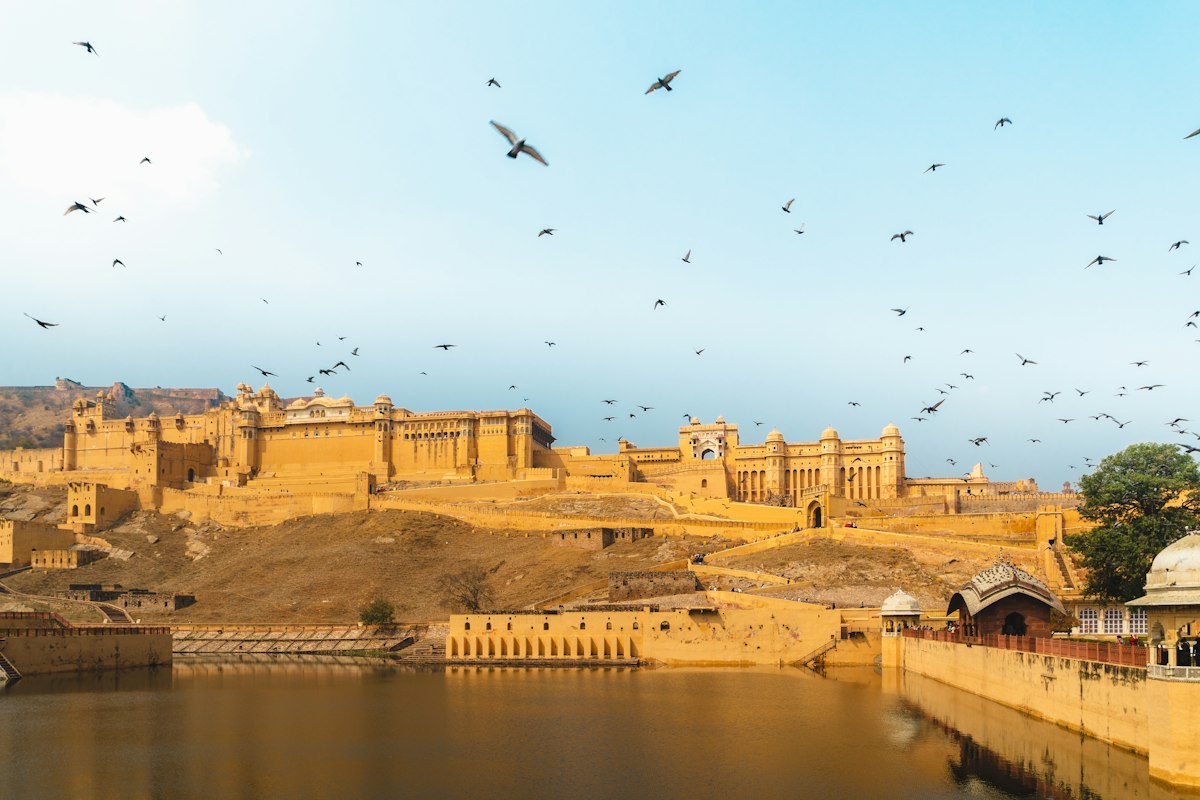
Why Jaisalmer packing is different
Jaisalmer sits deep in the Thar Desert, with some of the most extreme day-to-night temperature swings in India: scorching, sun-blasted afternoons followed by genuinely cold desert nights, especially November to February. Most visitors add an overnight or evening dune-camp desert safari to their stay, which means sand, wind, open-air sleeping arrangements, and zero light pollution worth packing for. The honey-colored fort city itself also involves a lot of uphill walking on sandstone in full sun.
Clothing
- Lightweight, loose cottons for daytime desert heat
- A proper warm layer, including a jacket, for cold dune-camp nights: even in shoulder season this catches people off guard
- A windproof layer for dusty, breezy dune excursions
- Modest, full-coverage clothing for fort and temple visits
- A scarf or shemagh-style wrap for sun and sand protection during camel or jeep safaris
- Thermal layers if visiting during peak winter (December–January) for overnight desert camping
Footwear & accessories
- Closed shoes that keep sand out: open sandals fill up fast on dune safaris
- Comfortable walking shoes for the fort's sandstone ramps and steps
- Sunglasses with strong UV and glare protection: sand reflects sun intensely
- A wide-brimmed hat or cap secured against wind
- A buff, bandana, or scarf for sandstorm-prone afternoons
- A daypack for camel/jeep safari essentials: water, layers, camera
Health, documents & tech
- Sunscreen SPF 50+ and lip balm for intense, dry desert sun
- Rehydration salts: dehydration risk is high in desert heat
- A basic first-aid kit, especially if camel riding or sleeping in remote dune camps
- Hand sanitizer and wet wipes, since running water can be limited at desert camps
- A fully charged power bank: outlets are scarce or shared at overnight desert camps
- Headlamp or small flashlight for navigating dune camps after dark