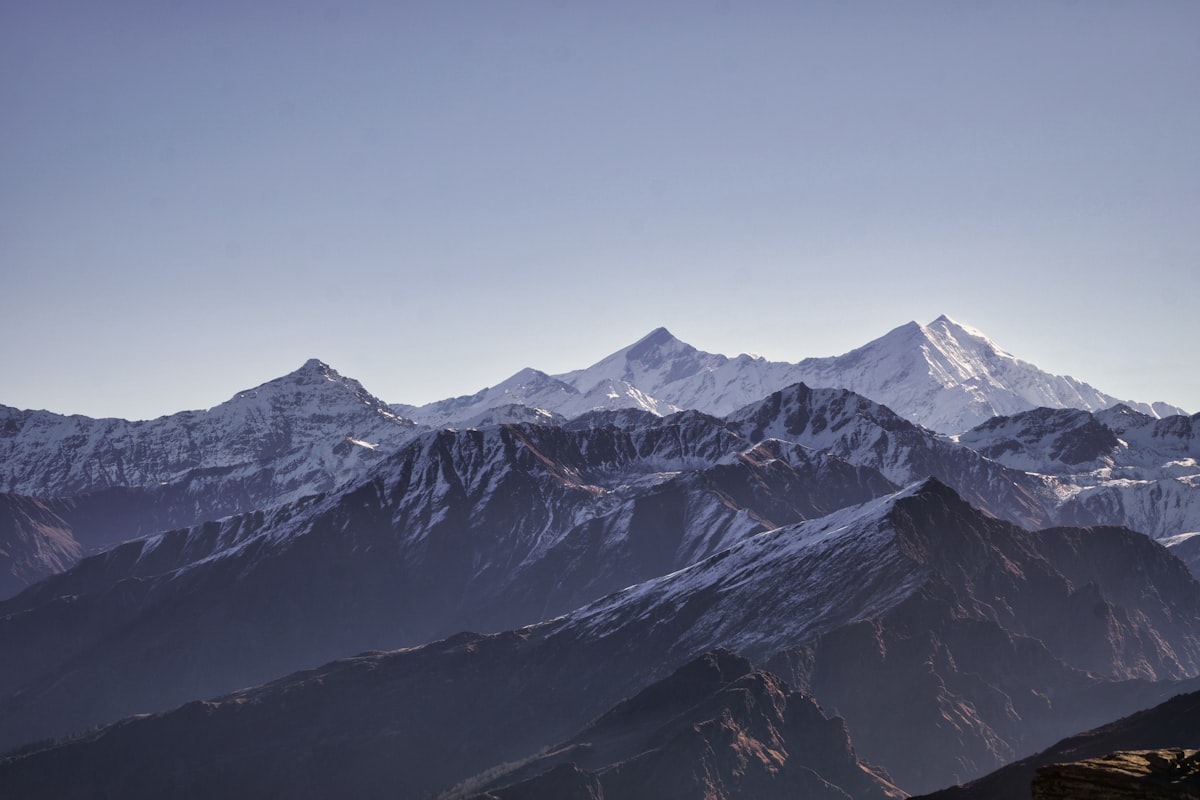
Why Himalayan trekking packing is different
Trekking in the Indian Himalayas means temperature swings of dozens of degrees within a single day: biting cold at dawn, strong sun at midday, and cold again the moment you stop moving. Altitude changes the rules too: thinner air means stronger UV exposure, slower recovery, and real risk of altitude sickness on longer or higher routes. This isn't a sightseeing packing list: it's built around a layering system and gear that keeps you safe, not just comfortable.
Clothing
- Moisture-wicking base layers: top and bottom, in more than one set
- Insulating mid-layer (fleece or down) for cold mornings and evenings at camp
- Waterproof, windproof outer shell jacket and pants
- Trekking trousers that dry quickly and layer well
- Warm hat and a sun hat: both needed across one trekking day
- Thermal gloves plus a thinner liner pair for dexterity tasks
- Buff or neck gaiter for wind and sun protection
Footwear & accessories
- Broken-in trekking boots with ankle support: never trek in new boots
- Wool or technical trekking socks, with a spare pair kept dry at all times
- Gaiters if snow or scree is likely on your route
- Trekking poles for steep descents and stream crossings
- Headlamp with spare batteries for early starts or delayed returns
- Daypack with rain cover, sized for layers, water, and snacks
Health, documents & tech
- Personal first-aid kit, including blister plasters and any altitude-related medication prescribed by a doctor
- Sunscreen SPF 50+ and lip balm with SPF: UV exposure is stronger at altitude
- Water purification tablets or a filter as backup to bottled water
- Electrolyte sachets for long trekking days
- Trekking permit copies and travel insurance details, where required for your route
- Power bank: charging points are rare or nonexistent once you're on trail
- Note any known altitude sensitivity to your trek leader before setting out
Always consult your trek operator or a doctor about altitude sickness prevention for your specific route and elevation.