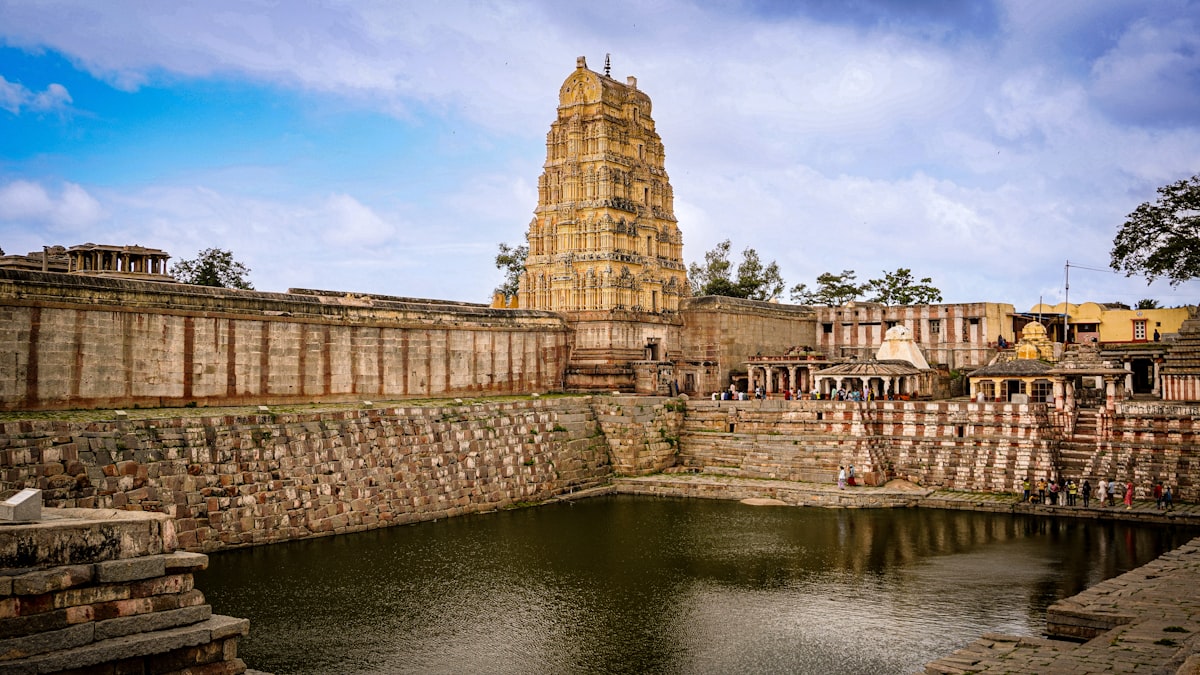
Why Hampi packing is different
Hampi is a sprawling UNESCO World Heritage ruin site set among giant granite boulders and dry scrubland, which means long, exposed walks between temples and monuments with little shade and genuinely hot, dry weather: especially March to May, when daytime heat is intense. Many travelers explore by rented bicycle or moped across uneven dirt paths between sites, and several temples within the ruins still hold active worship and expect modest dress despite the archaeological setting. This list leans into sun exposure, dust, and the cycling/walking pace that defines a Hampi visit.
Clothing
- Lightweight, breathable cotton or linen clothing for dry heat
- Long sleeves or a light cover-up: protects against sun more than humidity here
- Modest, covered-shoulder-and-knee outfits for active temples within the ruins
- A bandana or scarf to manage dust on cycling/moped routes between sites
- Comfortable, loose clothing that allows scrambling over boulders and ruins
- A light jacket for cooler early mornings, especially in winter months (December–February)
Footwear & accessories
- Sturdy, grippy walking shoes for boulder climbs and uneven ruin pathways
- Easy slip-on sandals for temple entries where footwear comes off
- A wide-brim hat and sunglasses: shade is scarce across most of the ruins
- A reusable water bottle, ideally insulated, given the heat and distance between water points
- A small backpack rather than a bag, for hands-free cycling and climbing
- A bandana or buff for dust on dirt tracks
Health, documents & tech
- Sunscreen SPF 50+ and lip balm with SPF: sun exposure is constant and shade is limited
- Electrolyte sachets and extra water for the dry heat
- Hand sanitizer and wet wipes
- Personal medication for heat-related discomfort
- ID copy and hotel confirmations
- Portable charger and a universal plug adapter (India: Type C/D/M)
Phone and data signal can be patchy across the spread-out ruin areas, so download offline maps before setting out for the day.