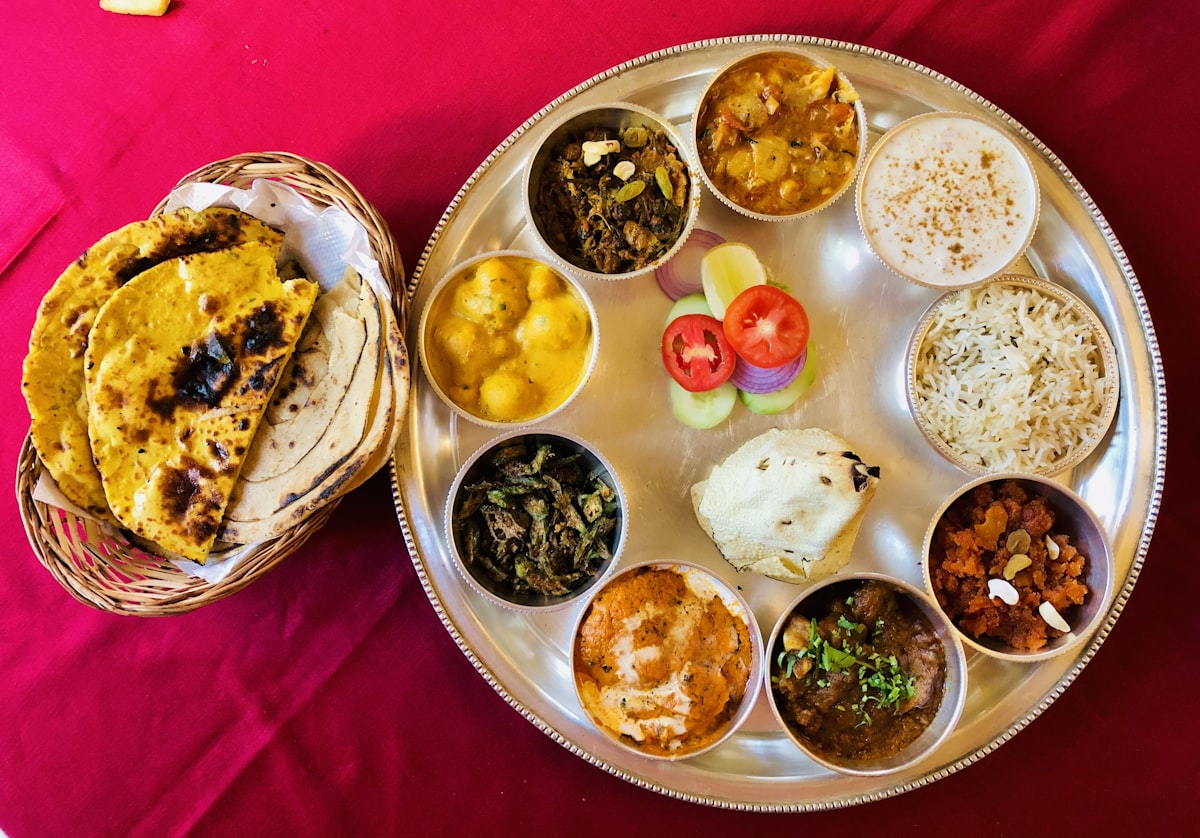
Food as hospitality
Meals in India are often treated as an act of hospitality rather than just sustenance, and being offered food: whether at a restaurant, a home, or a roadside stall: comes with a few customs worth knowing. Regional cuisines and customs vary widely, but some habits hold across most of the country. This guide covers the basics.
Eating with your hands
- Eating with your right hand is traditional and still common, especially with rice, breads, and street food
- The left hand is traditionally considered unclean for eating and is typically reserved for tasks like handling used items
- Cutlery is widely available and used, particularly in restaurants and cities: eating by hand is not required of visitors
- Wash your hands before and after eating if dining without cutlery; many restaurants provide a handwashing station for this reason
- Breads like roti and naan are typically used to scoop curries rather than eaten on their own
Vegetarian and dietary customs
- India has one of the world's largest vegetarian populations, and most restaurants clearly separate vegetarian and non-vegetarian menus or kitchens
- Beef is avoided by many Hindus and is restricted or unavailable in much of the country; pork is avoided by many Muslims
- Alcohol is not served at all restaurants, and some states restrict its sale on certain days
- It's polite to mention dietary restrictions when accepting an invitation, rather than declining dishes once served
- Jain dietary customs go further than general vegetarianism and also exclude root vegetables like onion and garlic: relevant if dining with Jain hosts
At the table
- If invited to someone's home, it's common to be offered second and third helpings: declining politely once is usually accepted, but expect gentle insistence
- Finishing everything on your plate is appreciated as a sign you enjoyed the meal
- Wait for the host or eldest person to begin eating before you start, especially in home settings
- Tipping in restaurants is appreciated but not always automatic: check whether a service charge is already included on the bill
- Complimenting the food directly to the cook or host is well received and often expected
Customs around alcohol, beef, and dietary restrictions vary significantly by region and religion: when in doubt, ask rather than assume.